


You can charge your electric vehicle entirely on solar power in Melbourne. But plugging a standard EV charger into a solar-powered house does not guarantee that your car will run on sunshine.
Many homeowners assume that if they have solar panels on the roof and an EV in the garage, the two will naturally work together. The reality is slightly more complicated. To charge an EV solely with the excess power generated by your roof, you need specialised hardware that can read your solar output and adjust the charging rate in real time.
If you get the setup wrong, your car will pull expensive power from the grid every time a cloud passes over your house. If you get it right, you can effectively drive your car for free.
Here is the exact breakdown of how to integrate an electric vehicle with a home solar setup, what equipment you actually need, and how to size your system to match your daily driving habits.
The Problem with Standard EV Chargers
Standard EV chargers do not know where your electricity is coming from. They only know how to draw a set amount of power.
If you plug your car into a standard 7kW wall charger at noon on a sunny day, the charger demands 7kW of power. If your solar panels are currently generating 5kW, the charger does not slow down to match the panels. It simply takes the 5kW from your roof and buys the remaining 2kW from the grid at standard daytime rates.
The problem gets worse with Melbourne’s weather. If a heavy block of clouds rolls in and your solar generation drops to 1kW, a standard charger keeps pulling 7kW. Now you are buying 6kW from the grid. You think you are running an EV off solar power, but your electricity bill will tell a different story.
The Solution: Solar Aware EV Chargers
To avoid buying grid power accidentally, you need a smart, solar-aware EV charger that supports smart charging.
A solar-aware charger communicates directly with your home’s electrical system. It monitors exactly how much surplus solar energy is being sent back to the grid. Instead of demanding a fixed amount of power, the smart charger constantly adjusts its draw to match your exact solar surplus.
If your house is generating 4kW of excess solar, the charger sends exactly 4kW to charge the car. If someone inside turns on the oven and the surplus drops to 1kW, the charger automatically throttles the car’s charging speed down to 1kW. If the sun goes behind a cloud and there is no surplus, the charger pauses entirely.
This guarantees that every electron going into your car is generated by your roof.
When planning an EV charger installation in Melbourne, asking for a solar-matching unit is the single most valuable decision you can make. Two of the most reliable options for this specific task are the Zappi EV charger and the Tesla Gen 3 Wall Connector.
A Zappi EV charger Melbourne installation is incredibly popular because the unit is specifically built to operate in an “Eco+” mode. This mode forces the charger to use 100% green energy, pausing the charge anytime grid power is required. Recently, we helped a homeowner in Preston sync their 7kW Zappi charger with their 6.6kW solar array, allowing them to charge entirely on excess solar during the day.
Tesla solar charging works in a very similar way. As certified Tesla installers operating in Melbourne, we frequently integrate Tesla Wall Connectors with existing residential solar setups. If you own a Tesla vehicle and a Tesla Wall Connector, the Tesla app allows you to enable a “Charge on Solar” feature. The hardware talks perfectly within its own ecosystem, adjusting the car’s charge limits based on real-time weather and home energy use.
The Financial Case: Why Exporting Power is a Bad Deal
Understanding why solar-aware charging matters requires a quick look at your electricity bill.
Ten years ago, energy retailers offered premium feed-in tariffs. They paid you handsomely for every kilowatt of solar energy you sent back to the grid. Those days are over. For most EV owners, retailers pay around 4 to 6 cents per kilowatt-hour for the exported solar.
However, when you buy power from the grid to charge your car at night, your charging costs run anywhere from 25 to 35 cents per kilowatt-hour.
Selling your power for 5 cents and buying it back for 30 cents is terrible arithmetic. The most financially effective thing you can do with a solar system today is use solar power directly. Storing your surplus roof energy inside your car battery gives you the maximum possible financial return on your solar investment. The less you pay to charge, the faster your solar system pays itself off.
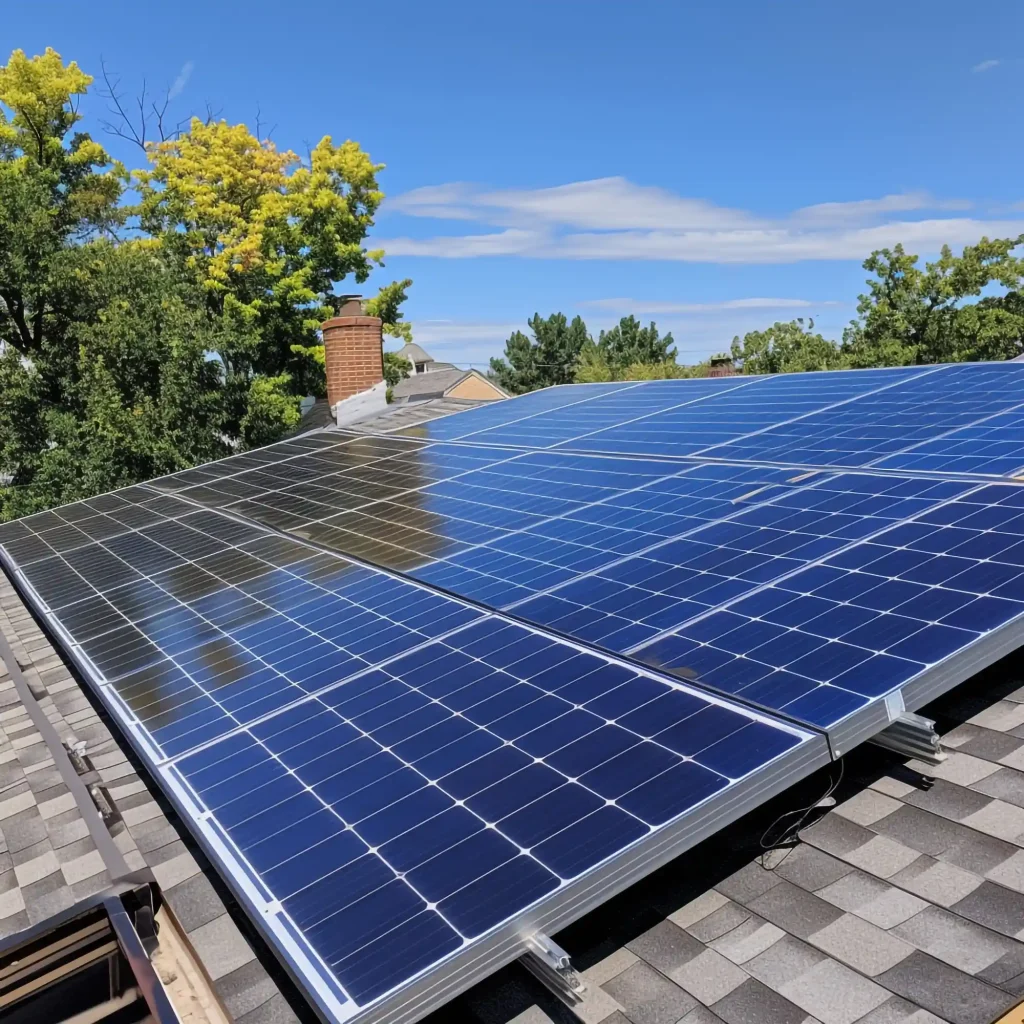
How Many Solar Panels to Charge an Electric Car?
The number of panels you need depends entirely on how far you drive and how large your car battery is. There is no universal answer, but we can look at the average Melbourne household to get a realistic baseline.
The average Melbourne driver covers about 35 kilometres a day. In a standard EV, driving 35 kilometres requires roughly 6 to 7 kilowatt-hours (kWh) of electricity.
A modern 6.6kW solar system in Melbourne produces about 20 to 25 kWh of energy on a clear summer day. On paper, this is more than enough to cover your daily driving.
But you have to account for the house. Your fridge, internet router, standby appliances, and hot water system all claim their share of that solar power first. If someone runs the washing machine or the air conditioner during the day, your surplus shrinks fast.
In winter, a 6.6kW system might only generate 8 to 10 kWh for the entire day. If the house uses 8 kWh, there is absolutely nothing left for the car.
If you are upgrading your rooftop solar system to charge an EV regularly, a standard 6.6kW system is rarely enough. You should aim for a 10kW system or larger. A 10kW to 13kW system provides a wide enough buffer to power the household appliances and still leave a heavy chunk of surplus energy to push into the car battery, even on overcast days.
Timing Your Charge: The Melbourne Commute Reality
The biggest hurdle for solar EV charging is the clock. Solar panels only generate power when the sun is up. If you drive your car to an office at 8:00 AM and park it there until 5:30 PM, your car is not home when the sun is shining.
You cannot charge your car directly from your roof at night.
Homeowners generally fit into one of three charging profiles. You need to identify which one you are before spending money on new hardware.
The Work-From-Home Driver
If you work from home, or if the EV is a secondary household car that stays parked in the driveway during the week, solar charging is effortless. You leave the car plugged in and charge your EV during the day. The smart charger monitors the roof and feeds the car a slow, steady diet of free solar energy all day long. This is the optimal scenario.
The Weekend Charger
If you commute to an office Monday to Friday, your car sits idle at home on the weekends. Because the average daily commute only drains about 10 to 15% of an EV battery, many drivers easily survive the working week without plugging in. When Saturday morning arrives, you plug the car in and let the smart charger fill the battery using weekend sunshine.
The Night Charger (The Battery Solution)
If you drive heavily during the week and absolutely need to charge at night, direct solar charging will not work for you. To run your car on solar power overnight, you need a home battery system like a Tesla Powerwall.
In this setup, your solar panels spend the day filling up your wall battery. When you get home at night and plug the car in, charge the EV using stored solar energy from the wall battery instead of buying from the grid. This requires a significant upfront investment, but it is the only way to achieve off-grid night charging.
Technical Requirements: Single-Phase vs Three-Phase Power
When you upgrade your home to handle both solar and an electric vehicle, your switchboard takes on a heavy load. This massive power draw from both the grid and solar simultaneously is exactly why your charger requires a dedicated circuit.
Most older residential homes in Melbourne operate on single-phase power. A single-phase property is typically limited to a maximum solar inverter size of 5kW and a maximum EV charging speed of 7.4kW.
If you want to install a massive 15kW solar array to quickly fill a large EV battery, or if you want a 22kW fast charger in your garage, a single-phase connection will not support it. You will need to upgrade the property to three-phase power.
Three-phase power allows for much larger solar exports and much faster car charging. However, three-phase upgrades are expensive and require interaction with your local energy distributor.
For the vast majority of homeowners, a single-phase 7.4kW smart charger paired with an 8kW to 10kW solar system is the most practical and cost-effective sweet spot. It provides enough speed to fill any EV overnight and enough solar intelligence to capture your daytime roof surplus.
Why Professional Integration Matters
Wiring a smart charger to talk to a solar inverter requires specific technical configurations. You are not just running a heavy cable from the switchboard to the garage. The electrician must install current transformer clamps or smart energy meters at the mains to accurately read the flow of grid electricity.
If these sensors are installed backward or configured poorly in the software, the charger will not know when you are exporting power. The entire solar-aware feature will fail, and the charger will no longer be aware of your surplus.
This is why you should rely on an electrical contractor who understands both sides of the equation. Handling solar installations and high-capacity EV chargers requires distinct safety checks. If you hire one company to do the solar and a different company to do the charger, you risk finger-pointing if the two systems refuse to communicate.
Our team handles the strict compliance checks and software configurations required for these specific integrations. We ensure the inverter, the smart meter, and the wall unit communicate flawlessly from day one. Because smart EV chargers and solar integrations require precision, all our installations are backed by our lifetime workmanship warranty.
Planning Your Next Steps
Integrating your household energy is a staged process. You do not have to do everything at once.
If you are buying an EV this month but plan to get solar next year, install a solar-aware smart charger now. It will operate perfectly well on standard grid power for home charging today, and it will be completely ready to read your solar surplus the day your panels are installed.
When upgrading your overall energy system, consider future-proofing your roof capacity. Even if you do not own an electric car right now, sizing your solar array larger than your current household needs guarantees you will have the free surplus energy waiting for you when you have an EV at home in your driveway.
Contact our team to book a site assessment. We can check your current switchboard capacity, review your daily energy usage, and recommend the exact hardware setup required to keep your car running on your own roof power.