


You’ve just bought an electric vehicle. You’re excited, the car is sitting in the driveway, and you want to charge your EV at home tonight. There’s a power point in the garage – so can you just plug in?
Technically, sometimes. Safely and legally? That’s a different answer.
This is the question most new EV owners don’t think to ask until something goes wrong – a tripping breaker at 2 am, a charger that never seems to finish the job, or worse, a wiring problem that only a licensed electrician can unravel.
This post explains the difference between a dedicated and shared circuit, what Australian standards actually say, and what’s genuinely at risk if you cut corners on your home EV charger installation.
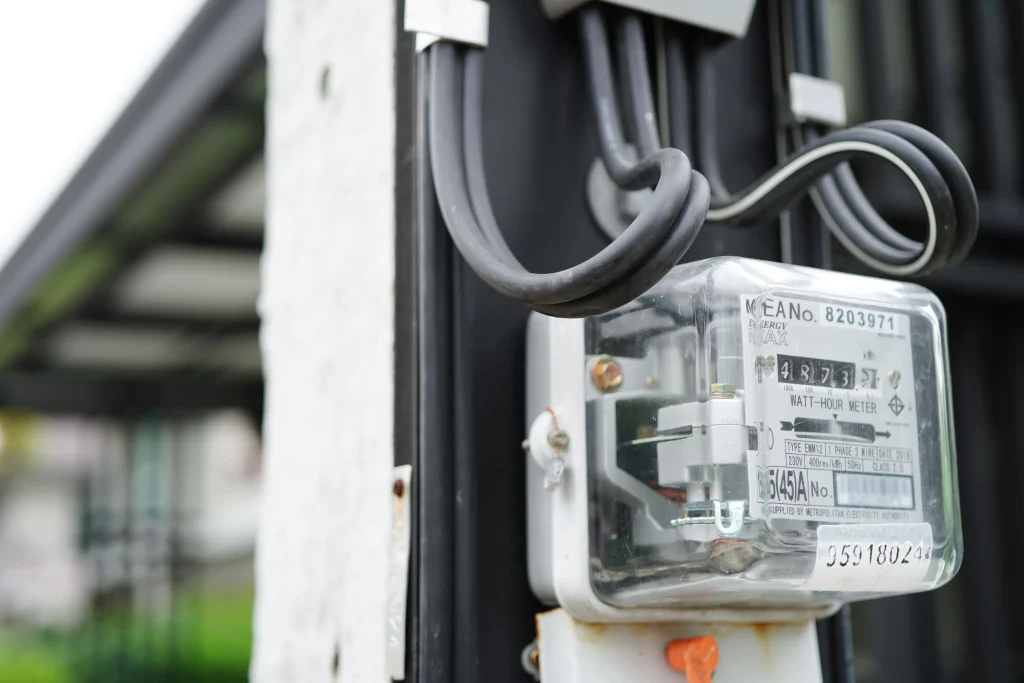
What Is a Dedicated Circuit vs. a Shared Circuit?
Before diving into requirements, it helps to understand what these terms actually mean.
A dedicated circuit runs directly from your switchboard to a single appliance – your EV charger, in this case. It has its own individual circuit breaker and its own RCD (residual current device, or safety switch). Nothing else is connected to it.
A shared circuit supplies power to multiple power points or appliances on the same wiring run. Your kitchen bench outlets, bedroom power points, and general lighting circuits are all typically shared – multiple appliances draw from the same cable and breaker.
A useful way to think about it: a dedicated circuit is a private lane on a motorway. Only your EV charger uses it – no congestion, no competition for capacity. A shared circuit is the main lane where everything jostles for the same space.
Shared circuits work perfectly well for most household appliances because those loads are small and intermittent. Your toaster runs for two minutes. Your phone charger draws barely anything. Your TV cycles up and down.
An EV charger is categorically different. It draws a heavy, sustained load – often for six to ten hours overnight. That changes the equation entirely.
Why Australian Standards Require a Dedicated Circuit for an EV Charger
This isn’t a matter of preference or best practice. It’s a legal requirement.
AS/NZS 3000 – the Australian/New Zealand Wiring Rules – mandates a dedicated hard-wired circuit for EV charger installation. Any compliant EV charger installation in Australia must meet the following:
These aren’t optional extras built into the price – they are the baseline for a compliant installation. A charger installed without meeting these requirements is non-compliant under Australian electrical standards.
The consequences of a non-compliant install go beyond the electrical risk:
- Your EV manufacturer’s warranty may be voided
- Your home insurance may refuse a claim if a fire or fault is traced to non-compliant wiring
- You carry legal liability if something goes wrong and the installation doesn’t meet AS/NZS 3000
A qualified electrician will assess your home’s electrical system and confirm whether your existing switchboard has capacity for a new dedicated circuit, or whether a switchboard upgrade is needed first.
What Actually Happens When You Share a Circuit with an EV Charger
Let’s be specific about the risks – not to alarm you, but because understanding them clearly is what makes the right decision obvious.
A Level 2 EV charger – the kind you’d install as a home charging station for meaningful overnight charging – typically draws 32A continuously. That’s not a spike. That’s a sustained load running for hours every single night.
Put that load on a shared circuit, and here’s what happens:
Overloaded wiring. Cables heat up beyond their rated capacity. Insulation degrades over time – not dramatically, but steadily. The fire risk from overloaded wiring isn’t dramatic; it’s gradual. By the time it’s visible, the damage is already done.
Nuisance tripping. The circuit breaker trips when another appliance draws from the same circuit while the EV charging is running. Your household keeps triggering incomplete charges without understanding why.
Voltage drop. Shared loads cause voltage to sag under demand. This slows your charge rate and puts sustained stress on your EV’s onboard charger – the component that converts AC power to the DC your battery stores.
No dedicated RCD protection. If the EV charger isn’t on a circuit with its own RCD, there’s no earth leakage protection sized specifically for that load. This is a direct electrocution risk in the event of a fault – particularly relevant given that EV charging involves sustained high-current flow in a location that may be damp (a garage or carport).
None of these outcomes is theoretical. They’re what happens when EV chargers are connected to circuits that weren’t designed for the load.
“But I’ve Been Charging Off a Regular Power Point, and It’s Fine”
This is probably the most common thing we hear – and it’s worth addressing honestly.
Many EV owners start with Level 1 trickle charging through a standard 10A power outlet. It appears to work because Level 1 draws much less current – around 8 to 10A – so the shared circuit copes without immediately tripping.
The trade-off is speed. Level 1 charging adds roughly 10 to 15km of range per hour. For most EVs, a full charge from a standard power outlet takes 24 to 40 hours. It’s usable for occasional top-ups, not practical for daily overnight charging.
The moment you upgrade to Level 2 EV chargers – which run at 7kW or higher, drawing 32A – the maths changes completely. That load is simply beyond what a standard shared circuit is rated to handle continuously.
Even with Level 1 charging, there’s a secondary issue worth understanding. A sustained 8 to 10A draw on a shared circuit for 10 or more hours overnight is well above the intermittent use those circuits are designed for. It’s not designed to carry that load every single day. Over months and years of overnight charging, the cumulative wear on wiring and components in an existing electrical system not designed for that duty cycle is real.
The question isn’t whether it works today. It’s whether it’s safe and compliant over the years of daily use.
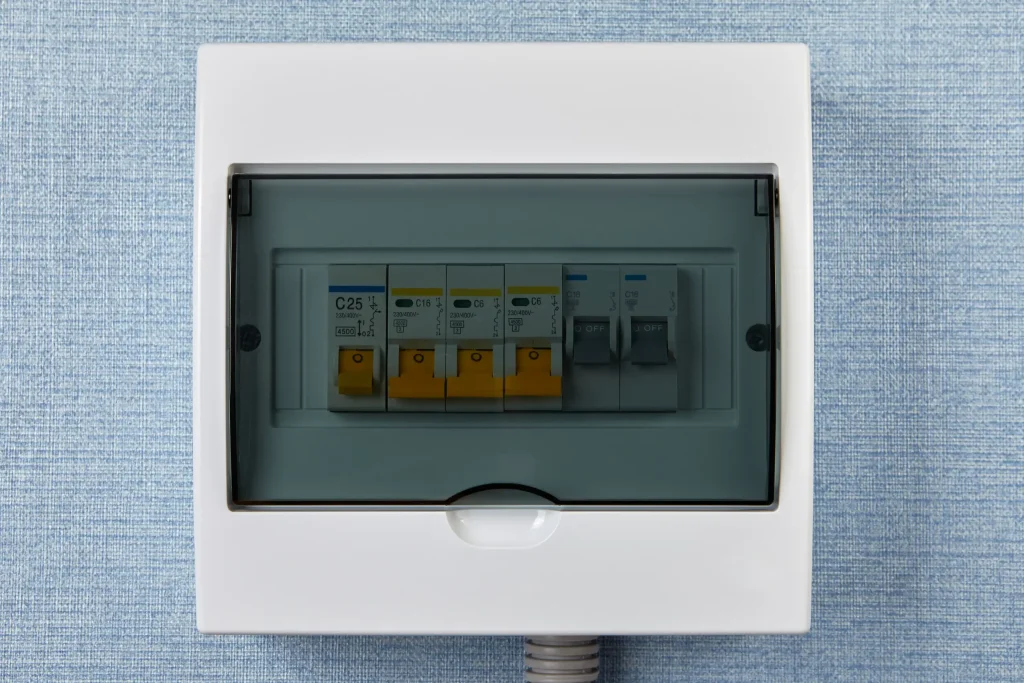
What a Proper Dedicated EV Charger Circuit Includes
A compliant EV charger installation isn’t complicated, but it does have specific requirements. Here’s what a proper dedicated circuit for your EV charger should include:
Direct cable run from the switchboard. The circuit runs straight from your switchboard to the charger – no other outlets or appliances tapped off it along the way. The cable is sized per AS/NZS 3008 based on the run length and sustained load.
Individual circuit breaker. Sized to match the charger’s rated current. This breaker protects only the EV charger circuit – it won’t trip because someone turned on the kettle.
Dedicated RCD protection. A safety switch specifically for the EV charger circuit, providing earth leakage protection at the load that matters. This is the protection that sits between a fault and a serious injury.
Correct mounting height. The charger is installed at a minimum of 800mm from ground level, per installation requirements.
All of this is assessed during a proper installation quote. Cable sizing, breaker rating, and RCD type all depend on your specific home – the distance from the switchboard, whether you’re on single-phase or three-phase power supply, and the charger model being installed.
If your switchboard doesn’t have available slots for an additional circuit – which is common in older Melbourne homes – a switchboard upgrade will be required before the EV charger installation can proceed. A good electrician will identify this upfront and quote it clearly, not after the job has started.
Frequently Asked Questions
Is a dedicated circuit legally required in Australia? Yes. AS/NZS 3000 mandates a dedicated final circuit for all EV charger installations. This applies to both single-phase and three-phase power supply configurations.
Can I use an extension lead to charge my EV? No. Using an extension lead for EV charging poses a serious risk of fire and electrocution. It’s non-compliant with Australian electrical standards and will void most EV manufacturer warranties.
What if my switchboard is full? If your current electrical panel doesn’t have capacity, you’ll need a switchboard upgrade before the dedicated circuit can be installed. This is common in older homes and is something a licensed electrician will identify during the assessment. Read our switchboard upgrade cost guide here.
Does a dedicated circuit add much to the installation cost? It’s built into any compliant install. It’s not an optional upgrade – it’s the minimum requirement. Any quote for EV charger installation should include the dedicated circuit as the baseline.
Can one dedicated circuit charge two EVs? Not simultaneously at full speed. Each charger needs its own circuit to draw its full rated current. If you have or are planning a second electric vehicle, the smartest approach is to plan for two dedicated circuits from the start – it’s more cost-effective than returning for a second installation later.
Will a dedicated circuit future-proof your home? Yes. A properly installed dedicated circuit is rated for daily sustained use and meets current Australian electrical installation standards. It also positions your home’s electrical system for later additions of solar, battery storage, or load management features.

Book a Free EV Charging Assessment
Not sure if your home is set up for safe, compliant EV charging? Main Switch Electrical offers a free electrical assessment for homeowners considering EV charger installation.
We’ll inspect your switchboard, assess your existing electrical capacity, and provide a fixed-price quote for a fully compliant dedicated circuit installation – no surprises, no hidden costs.
- Lifetime warranty on all work
- On time, or $50 back
- Tesla Certified Installer and CEC Accredited
- Available 24/7
Call us on 1300 624 679 or book your free assessment online.
We install EV charger circuits across Epping, South Morang, Bundoora, Mernda, Preston, and Melbourne’s north-east.