


You’ve researched the electric vehicle. You’ve compared every home charger on the market. You’ve probably already picked a spot on the garage wall. But here’s the step most EV buyers skip entirely: checking whether your switchboard can actually handle an EV charger.
Your home’s switchboard is the central control point for every amp of power going into your EV. If it’s outdated, overcrowded, or undersized, EV charger installation can’t happen safely until it’s addressed. This is the single most common reason EV charger installations end up costing more than expected – and the easiest thing to get clarity on before you book a quote.
This guide gives you a plain-language checklist, so you know exactly where you stand. At Main Switch Electrical, we’re Tesla-certified installers and CEC-accredited professionals who assess switchboards for EV readiness every week across Melbourne’s north-east. Here’s what we look for – and what you can check yourself right now.
What Your Switchboard Actually Does
Before we get to the checklist, a quick explainer is useful here.
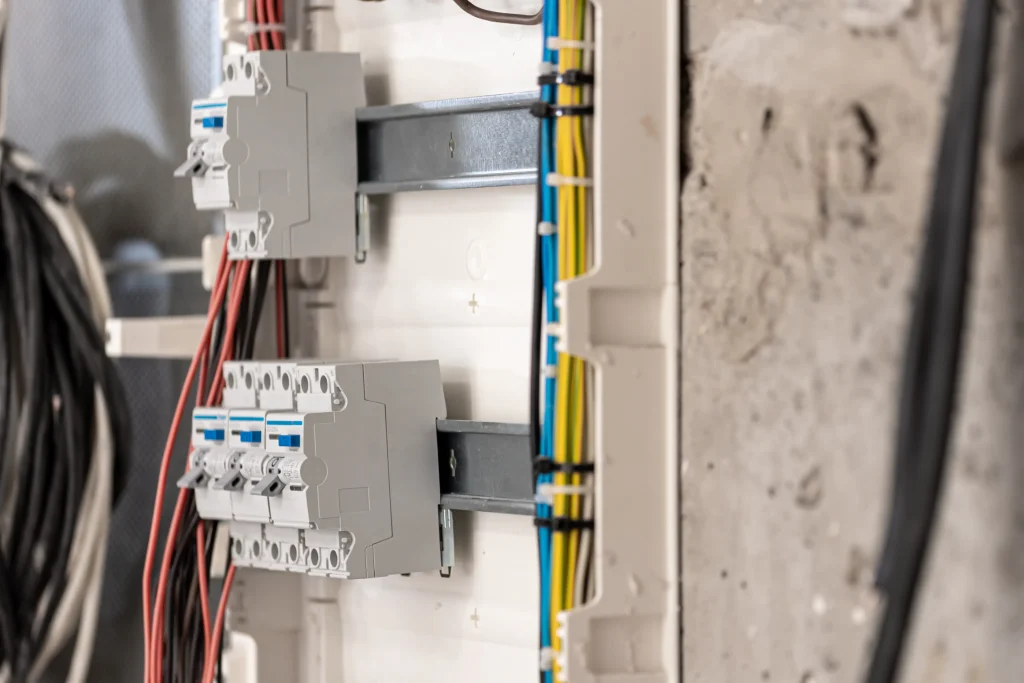
Your switchboard is the hub that distributes power from the grid to every circuit in your home. Each circuit has a circuit breaker that trips if the electrical load exceeds the wiring’s safe capacity. Modern boards also have RCDs – residual current devices, also called safety switches – that cut power instantly if they detect earth leakage, protecting people from electric shocks.
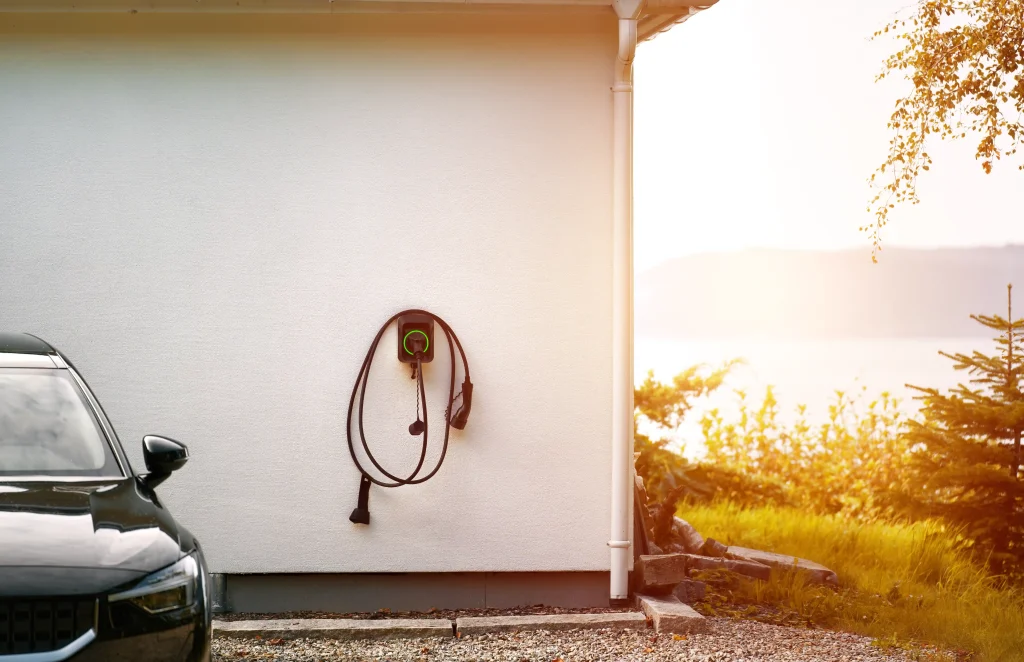
Now add a home EV charger to that picture. A Level 2 wall connector typically draws 32A continuously for hours at a time. That’s a significant, sustained load on your home’s electrical system – very different from a kettle that runs for two minutes. If your switchboard doesn’t have the capacity, the protection, or the physical space to support that load safely, it needs attention before the charger goes in.
5 Signs Your Switchboard Can’t Handle a Home EV Charger
Run through this list before you call anyone. You don’t need any tools – just open the cover of your switchboard (it should swing open easily without tools).
1. Ceramic fuses or rewirable fuse wire
If your board still uses ceramic fuses instead of modern circuit breakers, it’s too old to safely support EV charging. Boards like this are almost certainly non-compliant with the current AS/NZS 3000 standards and need to be replaced before any new load is added. This is especially common in older homes built before the 1980s.
2. No spare circuit breaker slots
Installing an EV charger requires a dedicated circuit with its own individual breaker. If your board is physically full with no empty breaker positions, there’s simply nowhere to add one. A switchboard upgrade or panel expansion is needed before installing an EV charger.
3. No RCD (safety switch) protection
Australian standards require RCD protection on any EV charger circuit. If your board has no RCDs at all or only partial coverage, it will need to be modified to comply. You’ll typically see RCDs labelled clearly on the board – they’re wider than standard breakers and have a “Test” button on the face.
4. Single-phase supply with a high existing load
Most Melbourne homes run on single-phase power, which provides a total supply capacity of roughly 63A. A 32A EV charger uses nearly half as much. If you’re already running ducted air conditioning, electric hot water, an oven, and a pool pump, you may not have enough headroom for home EV charging without load management or a supply upgrade.
5. Visible damage, rust, or obvious age
Scorch marks, a burning smell, melted plastic, or a board that’s clearly 25-plus years old are all red flags – regardless of your EV plans. A switchboard in this condition needs urgent assessment.
Single Phase vs Three Phase – Why It Matters for Charging at Home
If you’ve wondered why some EV drivers can charge their EV faster than others at home, phase supply is often the reason.
Most residential properties in Melbourne are single-phase. That’s fine for a EV charger – plenty of homes charge EVs every night without issue. But if your single-phase supply is already under heavy load, your electrician needs to account for that before signing off on the install.
Three-phase homes have far more headroom. If you’re on three-phase and your board is in good shape, the switchboard conversation is usually straightforward.
Main Switch assesses your supply and existing load as part of every free on-site quote. There’s no guesswork on your end.
What Happens If You Skip the Switchboard Check?
This section isn’t meant to alarm you – but it is worth understanding what’s actually at risk.
Overloaded circuits: When wiring runs beyond its rated capacity for extended periods, the insulation breaks down over time. This is how electrical fires start. A 32A EV charger running for eight hours overnight is exactly the kind of continuous high-load scenario that exposes undersized wiring.
Constant tripping: If the main breaker can’t handle the combined load of your home and EV charging, it will trip. You’ll wake up to an incomplete charge – and a household that’s frustrated by regular power interruptions.
Non-compliant installation: Connecting an EV charger to a switchboard that can’t properly support it means the installation isn’t compliant with AS/NZS 3000. A non-compliant EV charger installation can void your EV manufacturer’s warranty, affect your home insurance, and create legal liability if something goes wrong.
Failed inspection: Some energy distributors and councils inspect EV charger installations. A non-compliant switchboard will fail that inspection, leaving you with a charger you can’t legally use until it’s rectified.
The cost of getting it right upfront is far lower than the cost of fixing it after the fact.
What a Switchboard Upgrade for EV Charging Involves
If your switchboard needs to be upgraded before installing the EV charger, here’s what that typically looks like.
A standard switchboard upgrade involves:
- Replacing the old board with a modern unit fitted with circuit breakers and RCDs
- Adding a dedicated circuit for the EV charger with its own breaker and individual RCD protection
- Sizing the cable per AS/NZS 3008 based on the charger’s load and the cable run length from the board to the charger location
- Mounting the EV charger at least 800mm from the ground (required under Australian standards)
- For outdoor chargers, confirming that weather protection requirements are met
- Testing and issuing a Certificate of Electrical Compliance
Typical cost range: $520-$2,100 depending on the board’s condition, the complexity of the upgrade, and any cabling involved. This is in addition to the EV charger installation itself. Check our EV charger cost guide for the complete pricing details.
Your Quick Self-Check Before You Call a Licensed Electrician
Run through this checklist right now. No tools needed – just open the switchboard cover.
If you answered yes to any of the above, your home’s switchboard likely needs work before a home EV charger can go in.
If everything looks modern, there are spare slots, and RCDs are clearly labelled – you’re probably in good shape. A licensed electrician still needs to assess capacity and compliance before installation. But at least you’ll walk into that conversation knowing what you’re looking at.
FAQs: Switchboard and EV Charger Installation
Do I need a switchboard upgrade for an EV charger?
Not always. If your board is modern, has RCD protection across all circuits, and has a spare circuit breaker slot with sufficient remaining supply capacity, you may be able to install a home EV charger without any board work. A licensed electrician needs to confirm this before installation proceeds.
Can my switchboard handle a single-phase EV charger?
Yes, in most cases. Single-phase power is standard across residential Melbourne and is perfectly adequate for home EV charging. The key question is how much load you’re already running. If your single-phase supply has sufficient headroom, a 32A charger is straightforward to add. Load management or a smart charger with load balancing systems can also help if headroom is tight.
How long does a switchboard upgrade take?
A standard upgrade typically takes one day. Main Switch often completes the switchboard upgrade and installation of the EV charger on the same visit.
Will the power be off during the upgrade?
Yes, temporarily – usually for a few hours. We’ll let you know what to expect when we provide your fixed-price quote.
Can I do the switchboard upgrade now and install the EV charger later?
Absolutely. If you’re buying an EV soon but not quite yet, getting the switchboard sorted in advance is smart planning. We can prepare your switchboard for an EV charger now and install the wall connector when you’re ready.
Does Main Switch check the switchboard as part of the EV charger quote?
Yes. Every free on-site assessment includes a full review of your switchboard for EV readiness. We check capacity, protection, available circuits, and supply type before we quote anything.
Not Sure If Your Switchboard Is EV-Ready? Book a Free Assessment.
If this checklist raised any doubts, or if you want a licensed electrician to confirm your board is ready before you commit to a charger, book a free on-site assessment with Main Switch Electrical.
We’ll check your board, assess your supply capacity, and give you a fixed-price quote that covers everything needed – switchboard work and EV charging installation included.
- Call us on 1300 624 679
- Lifetime warranty on all work
- On time or we pay you $50
We carry out EV charger installations across Epping, South Morang, Mernda, Bundoora, Thomastown, Preston, and across Melbourne’s north-east.